season-of-waiting

A Deep Dive Into Scriptures — “Season of Waiting”?

July 3, 2026 in Deep Dive Into Scriptures

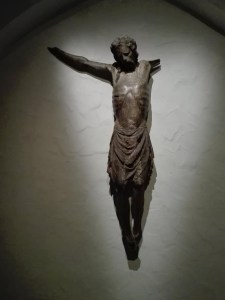
Photo by Samantha Sophia.

‘Waiting’ when related to The Bible and faith should not be associated with -or interprented as inaction. The Bible makes many references to patience in waiting. Let’s dwelve in to it..

“But they that wait upon the LORD shall renew their strength; they shall mount up with wings as eagles; they shall run, and not be weary; and they shall walk, and not faint.” — Isaiah 40:31

“Be patient, then brothers, until the Lord’s coming. See how the farmer waits for the land to yield its valuable crop and how patient he is for the autumn and spring rains. You too, be patient and stand firm, because the Lord’s coming is near.” — James 5:7–8

How should we interprent the biblical use of “waiting”?

The word Waiting is an action, it is a noun used for a kind of action that’s characterized by inaction or delay. Other excellent nouns characterizing specific types of delayed action include procrastination(delaying through apathy), cunctation (deliberate or calculating delay), and dilly-dallying (wasting time through hesitation).

To be in patient waiting for The Lord does not mean that we should not be in motion. The Bible speaks of waiting for The Lord, to wait patiently. Scripture emphasizes that God uses these periods to build your faith, refine your character, and align your heart with His timing, which is always perfect.

In the Bible, waiting is described not as passive inactivity, but as an active, courageous posture of trusting God’s timing, sovereignty, and goodness. It is framed as a way to grow patience, renew spiritual strength, and deepen faith while seeking God’s will.

Key Biblical Principles

  • Active Trust: Waiting is not doing nothing; it is actively placing your hope in God’s promises while yielding to His direction.
  • Character Refinement: God uses periods of delay to build endurance, humility, and steadfastness.
  • Perfect Timing: The Bible emphasizes that God’s plans are perfect, often using the waiting period to align your heart with His will.

Core Scripture Highlights

  • Psalm 27:14: Encourages believers to “Wait for the Lord; be strong, and let your heart take courage; wait for the Lord!”
  • Isaiah 40:31: Promises that “they who wait for the Lord shall renew their strength; they shall mount up with wings like eagles…”
  • Lamentations 3:25: Reminds us that “The Lord is good to those who wait for Him, to the soul who seeks Him.”
  • James 5:7–8: Uses the analogy of a farmer patiently waiting for the “early and late rains” for the harvest

Examples in the Bible

  • Abraham & Sarah: Waited decades for the fulfillment of God’s promise to give them a son.
  • Joseph: Endured slavery and imprisonment for years before being elevated to a position to save his family.
  • David: Anointed king as a youth but waited years, running from King Saul, before taking the throne.

Conclusion:

To wait in an active devotion – The waiting process is meant to be filled with prayer, seeking God’s presence, and remaining constant rather than giving up.

i am affirmations

A Deep Dive Into Scriptures — Faith Centered Affirmations & Why New Age “I Am” Affirmations Doesn’t Serve The Purpose Of Faith

July 3, 2026 in Deep Dive Into Scriptures

15 Biblically aligned affirmations and why new age “I Am” affirmations doesn’t serve the purpose of Faith.

Why new age “I Am” affirmations doesn’t serve the purpose of Faith

This new age affirmations pracitice focuses on the basis of a self-validation that goes against the teachings of the bible. Because the bible tells us to live through Him and to deny ourselves. Let us deep dive into the Biblical scriptures to discover how “I Am” affirmations do not align with the purpose of faith, but instead are contradictory to the Word of God.

“If anyone wishes to follow Me [as My disciple], he must deny himself [set aside selfish interests], and take up his cross [expressing a willingness to endure whatever may come] and follow Me [believing in Me, conforming to My example in living and, if need be, suffering or perhaps dying because of faith in Me].” -Luke 9:23

Self-validation is on the opposite end of self-denyin

Renouncing oneself as the center of existence (self-denial) is a fundamental principle in biblical faith. We are called to take up the cross and live in accordance to His Word and His Will. Self-affirmations claim authority, it is creating your own purpose, it is a selfish interest and it is disobedience. It is a personal power which creates a separation from God.

  • Self-affirmations claim authority. The Bible says that all authority comes from and originates with God. He is the absolute source of authority in the universe. His Word weights heavier than our will (God says deny ourselves).
  • Self-affirmations is creation of our own purpose. The bible says to seek God’s Will and purpose for our life.
  • Self-affirmations is self-worship. Affirmations such as “I am complete” and “I am destined for success” is self-worship. Wikipedia defines worship of self as “the belief in the divinity of oneself or the potential for self-deification”. 1st commandment (Exodus 20:3–5) says, “You shall have no other gods before Me.”.
  • Self-affirmations is a selfish interest. “For where you have envy and selfish ambition, there you find disorder and every evil practice.” — James 3:16

“But mark this: There will be terrible times in the last days. People will be lovers of themselves” — 2 Timothy 3:1

  • Self-affirmations is disobedience. Deuteronomy 8:17 warns believers against saying in their hearts, “My power and the might of my hand have gained me this wealth,” reminding them that God gives the ability to produce wealth.
  • Self-affirmations is creating our own identity. Identity in Christ means your fundamental worth, purpose, and definition come from what God says about you through Jesus, rather than your career, status, or failures.
  • Self-affirmations is manifesting. We manifest in conversation with the LORD in prayer, but self-affirmation is a secular form of piety.

Romans 8 reads that those who love God, those who are called according to His plan and purpose, are “predestined to be conformed to the image of His Son“.

Paul says that, “He has called us to live a holy life. The one who turns away from this teaching does not turn away from man, but from God.” (1 Thessalonians 4). Self-validation outside of Christ is a risk because it feeds an independence that lead down a separate, different path, away from God.

It nurtures life without Christ.

What is impurity to God? The answer is unholy living. What is unholy living to God? That which fails to foster intimacy with God. And so new age “I Am” affirmations is impure and a selfish interest (Luke 9:23) that disassociates onseself from walking in holiness. It creates a separation. Removing impurities brings us closer to God.

  • “I am powerful”. No, the LORD is powerful.
  • “I am strong and capable” is very different from “I can do all things through Him who strenghtens me

Your self-talk matters. Affirmations is defined as reprogramming of the unconscious mind. it rewires the mind, reshaping your brain’s structure and thought habits. This is why self-affirmations lead you astray and away from God.

“I am” statements affirm who we want to beWe are to be in Christ. To “be in Christ” means your identity, purpose, and spiritual life are permanently united with Jesus.

“I am” statementsaffirm how we want to feelWe want to feel a closeness to God. Feeling close to God comes from small, daily habits and we want to build this intimacy by engaging in open conversation through prayer, reading sacred texts, practicing gratitude, and serving others. James 4:8 says “Draw near to God, and he will draw near to you.”

“So the Lord wants you, me, and every brother and sister in our churches to encourage each other to walk in holiness.” — Ephesians 1:4

God’s Word is the most important tool that we have as believers. It is the guide that we live by. It is how we can know Christ. To study the Word of God (the biblical scriptures) we get closer to Him. It can transform us, empower and correct us. His Word grows the wisdom and understanding that outlines a life of faith. Obedience to the Word leads to holy living.

Followers of Jesus are called to find identity in Him and seek to align our lives according to His will (Matthew 6:33). Surrendering to Him means renouncing oneself as the center of existence, therefore “I Am” affirmations does not encourage (but contradict) that fundamental principle of our faith.

“By this the love of God was displayed in us, in that God has sent His [One and] only begotten Son [the One who is truly unique, the only One of His kind] into the world so that we might live through Him.” — 1 John 4:9

We are called to embrace His example of living and to set aside selfish interests that may lead us away from Him.

Hebrews 13:9 says, “Don’t be led astray by various kinds of strange teachings“. We need to be protective of the intention in our hearts to remain faithful to the way that reflects God’s will.

“Don’t be led astray by various kinds of strange teachings“. — Hebrews 13:9

Faith powered affirmations encourage intimacy with God. Biblical affirmations that are Christ centered abide by this rule.

The phrase “I Am” holds a special significance in the Bible. It is linked to the divine name of God and holds significance for the 1 Exodus passage mentioned earlier.

God said to Moses, “I AM WHO I AM”; and He said, “You shall say this to the Israelites, ‘I AM has sent me to you.’ ” — Exodus 3:14

Exodus 3:15 Then God also said to Moses, “This is what you shall say to the Israelites, ‘The Lord, the God of your fathers, the God of Abraham, the God of Isaac, and the God of Jacob (Israel), has sent me to you.’ This is My Name forever, and this is My memorial [name] to all generations.

Proverbs 16:18–19 tells us that “pride goes before destruction, a haughty spirit before a fall”.

Wewant to embody a life that mirrors the teachings of Jesus and biblical affirmations that are Christ centered strengthens our transformation in Christ by the triumphant power of the Holy Spirit instead of conforming to the world. Our everyday decisions, down to “I Am” affirmations, effects the paths that present themselves (that we open through every action) and that we chose to walk on.

When we have decided to follow Jesus, there should be a desire to follow Gods plan. To seek His Kingdom and Righteousness. Glorifying Him.

Self-affirmations go against the teaching that we are to be self-sacrificing and humble. To renounce oneself as the center of existence. We are called to come closer to Jesus, be established by grace which makes it important to be protective of the intentions in our hearts. Live for the Lord, die for the Lord. Live for ourselves and we shall also die for ourselves. We need to be protective of the intention in our hearts. Which makes it important to remain faithful to the way that reflects God’s glory. To live a life that honors Him. We are to chose the Spirit led desired path and faith-validation renounce oneself as the center of existence. Faith powered affirmations that are Christ centered encourages our intimacy with God.

Following, 15 Biblically aligned affirmations that lines up perfectly with God’s Word.

Biblically aligned “I am” statements

  1. I am who God says I am — Exodus 3:14

2. I am a child of God — 1 John 3:1

3. I am accepted by Christ — Ephesians 1:6

“Therefore, [continue to] accept and welcome one another, just as Christ has accepted and welcomed us to the glory of [our great] God.” — Romans 15:7

4. I am chosen, holy, and blameless before God — Ephesians 1:4

“Just as He chose us in Him before the foundation of the world, that we would be holy and blameless before Him.” — Ephesians 1:4

5. I am joined to the Lord and one spirit with Him — 1 Corintians 6:17

6. I am redeemed by the blood of Jesus — Ephesians 1:7

“In Him we have redemption (deliverance and salvation) through His blood, the remission (forgiveness) of our offenses (shortcomings and trespasses).”

7. I am empowered by the Holy Spirit — Isaiah 11:2

“The Spirit of the LORD will be with him to give him understanding, wisdom, and insight. He will be powerful, and he will know and honor the LORD.”

8. I am secure in the shadow of the Almighty — Psalms 91:1

“He who dwells in the shelter of the Most High Will remain secure and rest in the shadow of the Almighty [whose power no enemy can withstand].”

9. I am protected and defended by His angels — Psalms 91:11

“For He will command His angels in regard to you, To protect and defend andguard you in all your ways [of obedience and service].”

10. I am fearfully and wonderfully made — Psalm 139:14

11. I am not afraid, for God is with me — Isaiah 41:10

12. I am holy and without blame before Him in love — Ephesians 1:4

“According as He hath chosen us in Him before the foundation of the world, that we should be holy and without blame before Him in love.”

13. I am strengthened and empowered through Him — Philippians 4:13

14. I am fearfully and wonderfully made — Psalm 139:14

15. I am worth more than rubies — Proverbs 3:15

A Deep Dive Into Scriptures — What Does The Bible Teach About Prayer? (How To Pray)

July 3, 2026 in Deep Dive Into Scriptures

Jesus defined prayer as an intimate, heartfelt communication with God as a loving Father. He emphasized sincerity, humility, and persistence over outward performances, providing the Lord’s Prayer in Matthew 6:9–13 as a model to praise God, seek His will, and ask for daily needs.

Matthew 6:9–13 contains the “Lord’s Prayer” (or the “Our Father”). In this passage, Jesus teaches His followers how to pray by providing a model prayer that balances praising God, asking for daily needs, seeking forgiveness, and requesting protection from evil.

Here is the text of the passage (from the NIV Translation):

9 “This, then, is how you should pray:
“‘Our Father in heaven,
hallowed be your name,
10 your kingdom come,
your will be done,
on earth as it is in heaven.
11 Give us today our daily bread.
12 And forgive us our debts,
as we also have forgiven our debtors.
13 And lead us not into temptation,
but deliver us from the evil one.’”

The Structure of the Prayer

  1. Praise and Adoration (Verses 9–10): Acknowledges God’s holiness (“hallowed be your name”) and aligns human desires with God’s ultimate purpose (“your kingdom come, your will be done”).
  2. Provision and Humility (Verse 11): Relies on God for daily physical and spiritual sustenance (“daily bread”).
  3. Forgiveness (Verse 12): Asks for God’s mercy while committing to extend that same grace to others.
  4. Protection (Verse 13): Prays for deliverance from moral failure, testing, and spiritual harm

The Bible teaches that prayer is a direct, loving conversation with God. Rather than a religious duty or a way to boast, it is a personal relationship of trust and vulnerability, intended to draw believers closer to God, express gratitude, and bring requests to Him.

The Scriptures provide a comprehensive guide on how to approach prayer:

Authenticity over Performance: Jesus warned against praying merely to be seen by others or using vain repetitions. He taught that prayer should be a genuine, humble expression of the heart (Matthew 6:5–8).

The Model for Prayer: In the Lord’s Prayer (Matthew 6:9–13), Jesus provided a foundational template. It highlights acknowledging God’s holiness, prioritizing His will, asking for daily provision, seeking forgiveness, and praying for deliverance from temptation.

Persistence and Faith: Believers are encouraged to pray “without ceasing” (1 Thessalonians 5:17). Persistence in prayer shows reliance on God and demonstrates deep trust in His timing and character.

Asking in Jesus’ Name: The Bible teaches that prayer is often directed to God the Father, but based on the authority of Jesus (John 14:13). This means praying in alignment with His character and what He desires.

Releasing Anxiety: The Apostle Paul teaches that instead of worrying, we should present every situation to God with thanksgiving. In return, God promises to guard the believer’s heart and mind with His peace (Philippians 4:6–7)

Here are specific scriptural examples and a practical guide to help you apply these biblical principles.

Notable Prayers in the Bible

  • The Lord’s Prayer (Matthew 6:9–13): Jesus’ master template focusing on God’s glory and daily human needs.
  • David’s Prayer of Repentance (Psalm 51): A raw, honest cry for mercy and cleansing after personal moral failure.
  • Jesus’ Intercessory Prayer (John 17): A deep, loving prayer for the unity and protection of His followers.
  • The Early Church’s Prayer for Boldness (Acts 4:23–31): A communal request for courage amid intense persecution.

Verses for Strength and Healing

  • Isaiah 40:31: Promises renewed strength to those who wait upon and trust the Lord.
  • James 5:16: Assures that the earnest prayer of a righteous person has great power and wonderful results.
  • Psalm 147:3: Reminds believers that God heals the brokenhearted and binds up their painful wounds.

Template for Personal Prayer

You can easily structure your own prayers using the historical acronym A.C.T.S. as a guide:

  • Adoration: Praise God for who He is (His love, patience, and power).
  • Confession: Honestly admit your mistakes and ask for His forgiveness.
  • Thanksgiving: Express gratitude for specific blessings and answers to past prayers.
  • Supplication: Present your requests, needs, and desires for yourself and others.

If you want to focus your prayer time:

  • What specific situation you are facing right now (e.g., a tough decision, an illness, a transition)?
  • Who you are interceding for (e.g., yourself, a family member, a friend)?
  • What emotional support do you need most right now? (e.g., comfort, courage, peace, patience)
Skip to toolbar